
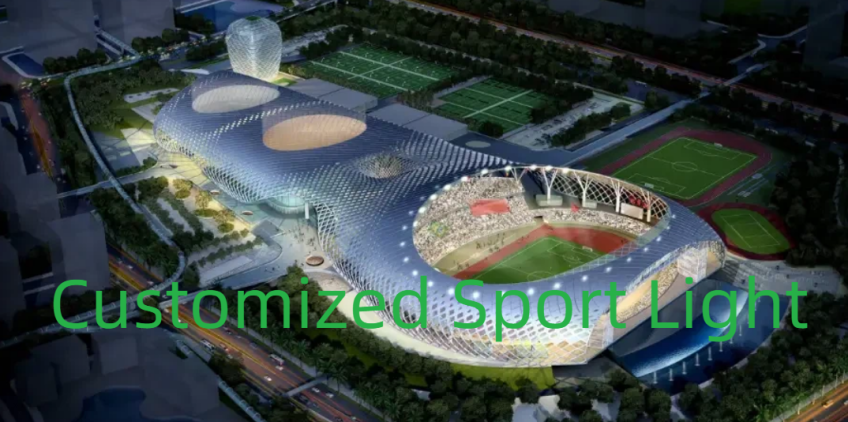

2026 Customized LED lighting solutions sports venue
Introduction
In today’s era of booming sports industry, lighting systems are no longer simply functional requirements, but key factors in improving the quality of events, ensuring athlete performance, and enhancing audience experience. From small community sports fields to international standard professional venues, LED lighting technology is completely changing the landscape of sports lighting with its excellent performance and flexibility. This article will delve into how customized LED stadium lighting solutions can meet the diverse needs of sports venues of different levels, and demonstrate the advantages of modern LED sports lighting technology through multidimensional analysis such as data cases, energy efficiency comparisons, customer evaluations, and product certifications.
Differences in Lighting Standards for Different Levels of Venues
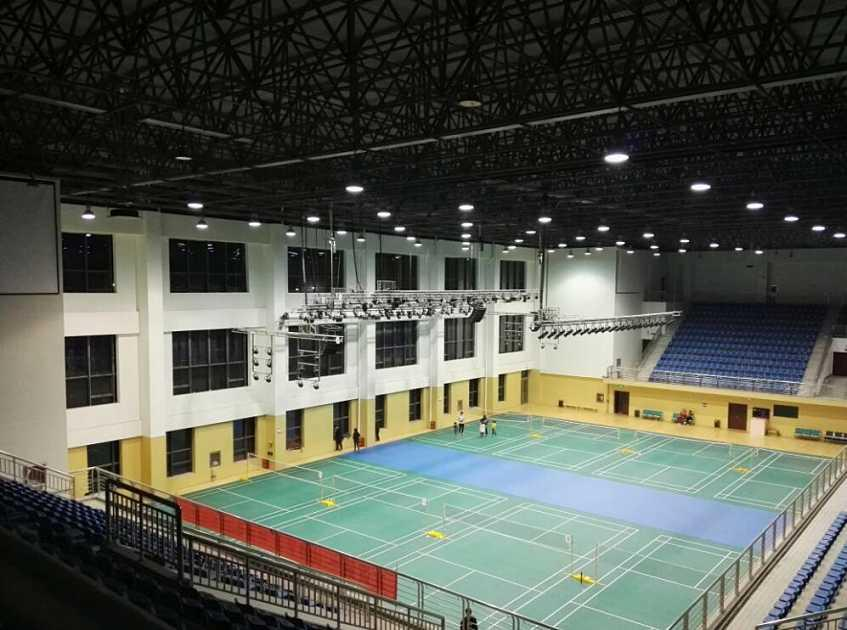
Sports venues have completely different requirements for lighting systems based on their usage functions and levels. The International Commission on Illumination (CIE) and various sports federations have developed detailed lighting standards:
-Community/school venues: typically require 150-300 lux of illumination to meet basic training and amateur competition needs.
-Regional competition venues: require 300-500 lux to ensure the normal conduct of regional level competitions.
-Professional competition venues: require 500-1000 lux to meet the basic requirements for television broadcasting.
-International events/high-definition broadcasting venues: up to 1000-2000 lux, ensuring the quality of ultra high definition slow motion playback.
Performance Comparison between Traditional Lighting and LED Lighting
There are significant differences in key indicators between traditional metal halide lamps and modern LED stadium lighting systems:
|Indicators | Metal Halide Lamps | Modern LED Systems | Improvement Range|
|—————–|——————-|——————-|———|
|Energy efficiency (lm/W) | 80-100 | 130-180 |+60%|
|Color rendering index (CRI) | 65-70 | 80-95 |+25%|
|Start time | 5-15 minutes | Instant | 100%|
|Lifespan (hours) | 8000-12000 | 50000-100000 | 6-8 times|
|Dimming ability | Limited | 0-100% stepless | -|
|Maintenance cost | High (frequent replacement) | Extremely low | -|
Table: Comparison of Key Performance Indicators between Traditional Lighting and LED Lighting.
Technical advantages of customized LED stadium light solutions
2.1 Modular design adapts to different venue requirements
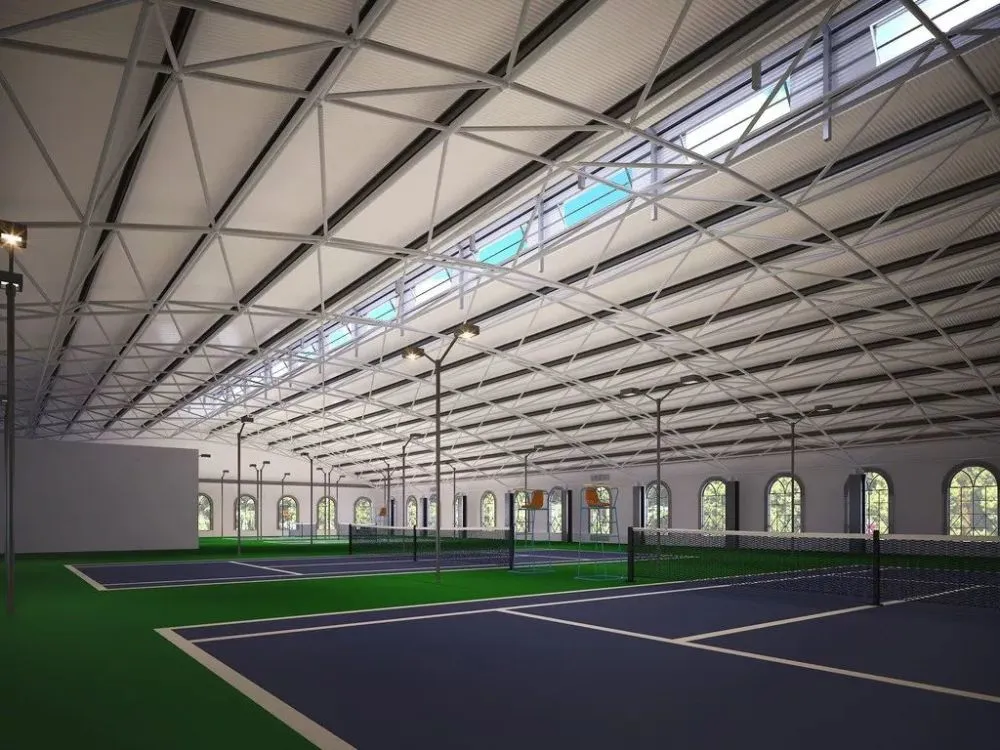
The modern LED sports lighting system adopts a highly modular design concept, which can be flexibly configured according to venue size, sports type, and budget:
-Small community venues: using 100-200W modules, 6-12 lights can meet the needs.
-Medium sized professional venues: using 400-600W modules and 20-40 lamp configurations.
-Large event venues: 800-1200W high-power modules, 50-100 lamp systems
Taking the Flex Beam system of a certain brand as an example, its modularity allows customers to increase or decrease lighting power with a precision of 5%, ensuring neither energy waste nor sacrificing lighting quality.
2.2 Intelligent control system improves energy efficiency performance
The advanced intelligent control system has brought revolutionary energy efficiency improvements to LED sports lighting:
-Motion sensing mode: automatically adjusts to the lowest power consumption state (about 10% of full power) when no one is using it.
-Event mode preset: One click switch between different lighting scenarios such as training, competition, and broadcasting.
-Sunlight linkage system: automatically adjusts output according to natural light intensity, saving 20-40% energy consumption.
-Remote monitoring: Real time monitoring of the working status of each lamp, predictive maintenance to reduce downtime.
Case data shows that after installing an intelligent LED stadium light system, the annual electricity consumption of a football stadium in Germany decreased from 1250000 kWh to 480000 kWh, saving 61.6%.
Empirical case analysis
3.1 Local Sports Stadium Renovation Project: A Community Football Field in a City, Shandong Province
Project Background:
-Originally used 8pcs 1000W metal halide lamps.
-Annual operating time is about 1800 hours.
-Frequent bulb replacement issues (an average of 3-4 bulbs replaced per year)
Renovation plan:
-Install 12pcs 200W LED sports specific lighting fixtures.
-Equipped with basic intelligent control system.
Effect comparison:
|Indicator | Before renovation | After renovation | Change rate|
|—————–|————–|————–|———|
|Total power (W) | 8000 | 2160 | -73%|
|Annual electricity consumption (kWh) | 14400 | 3888 | -73%|
|Annual electricity fee (yuan) | 11520 | 3110 | -73%|
|Illumination (lux) | 220 | 280 |+27%|
|Maintenance cost (yuan/year) | 2400 | 200 | -92%|
Customer review: “After the renovation, not only is the lighting more uniform and bright, but the young players’ feedback can better judge the ball path. In addition, the electricity bill has been reduced by nearly three-quarters, exceeding our expectations.” – Mr. Zhang, the venue administrator.
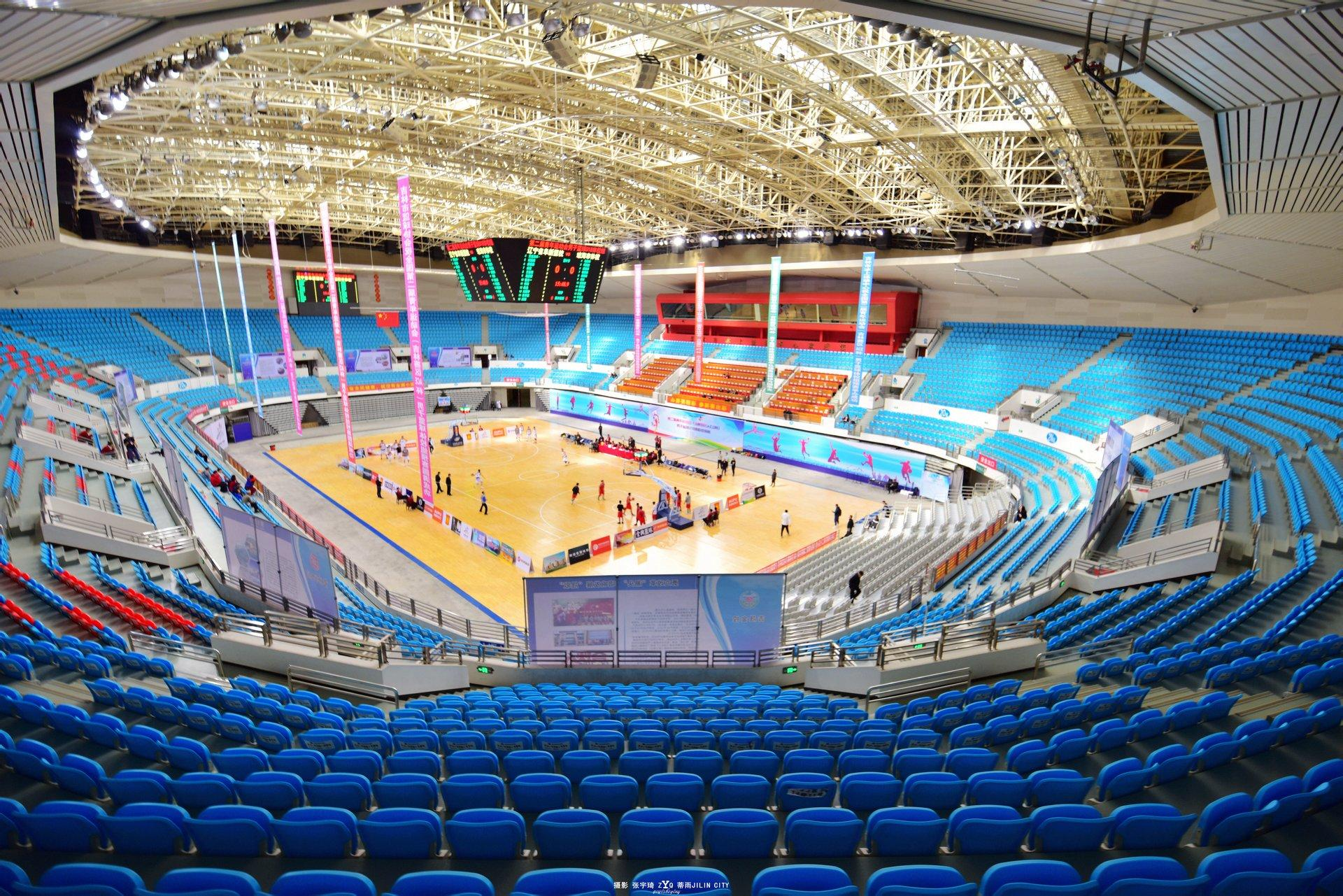
3.2 Professional Venue Case: A Basketball Arena in Shanghai
Project Challenge:
-Meet the television broadcasting requirements of CBA league.
-Resolve installation difficulties caused by limited top space.
-Realize fast switching between multiple scenarios (training/competition/entertainment activities).
Customized solution:
-Adopting ultra-thin 300W LED lighting fixtures (with a thickness of only 12cm).
-Color temperature adjustable system (5000K-6500K).
-Wireless Mesh Network Control System.
Certification and Standards:
-Certified Level 3 by FIBA (International Basketball Federation).
-Complies with GB/T 35626-2017 “Requirements and Inspection Methods for the Use of Sports Lighting”.
-Obtained EU EN 12193:2018 sports lighting standard certification.
Energy efficiency data:
-Lighting uniformity U1=0.8, U2=0.85 (far exceeding the standard requirement of 0.6/0.7).
-Annual energy savings of 540000 kWh, equivalent to reducing 430 tons of CO2 emissions.
-Glare index GR<25 (excellent level).
Customer feedback: “What we are most satisfied with about this system is its stability. There have been no malfunctions for two years, and the broadcasting company has particularly praised the color reproduction. The player’s skin color and team uniform color are very realistic and natural in the camera.” – Ms. Li, Director of Venue Operations.
Visual content enhances persuasiveness
4.1 Lighting Effect Comparison Atlas
A set of comparative images should be inserted here to demonstrate the visual differences between LED lighting and traditional lighting in different scenarios, including:
-Comparison of illuminance distribution heatmaps.
-Comparison of clarity in athlete motion capture.
-Comparison of Brightness Balance between Audience Stand and Venue.
4.2 Visualization of Energy Efficiency Data
Insert information chart to visually display:
-Bar chart comparing energy consumption of different types of venues.
-5-year Total Cost of Ownership (TCO) Comparison Curve.
-Schematic diagram of investment return cycle calculation.
Industry certification and standard compliance
Modern professional LED sports lighting systems need to comply with multiple international and domestic standards:
1.Light quality certification:
-TM-30-15 color fidelity Rf>85.
-CRI>90 (up to 95+for special broadcasting needs).
-No flicker authentication (>3000Hz).
2.Security authentication:
-IP66 protection level (dustproof and waterproof).
-IK08 impact resistance level.
-EU CE certification, US UL certification.
3.Sports specific certification:
-FIFA Quality Pro Football Field Certification.
-IAAF Class 1 Athletics Certification.
-NBA Court Lighting Guidelines Compliance.
4.Energy efficiency certification:
-Energy Star Certification.
-DLC Premium Energy Efficiency.
-China Energy saving Product Certification.
Future Development Trends
Sports lighting technology is still evolving, and several important trends are worth paying attention to:
1.LiFi optical communication technology: transmitting data through lighting to achieve high-speed wireless network in the venue.
2.Spectral adjustable technology: Adjust the spectral composition according to different motion requirements to optimize visual performance.
3.Digital twin system: Pre simulate lighting effects through 3D modeling and accurately plan installation plans.
4.Photovoltaic Integration: Combining solar panels to achieve a partially self powered green lighting system.
Conclusion
From local venues to professional venues, customized LED stadium lighting solutions are reshaping the future of sports lighting. Data shows that modern LED systems can not only significantly improve lighting quality and meet the needs of various levels of competitions, but also significantly reduce operating costs through excellent energy efficiency performance and intelligent control functions. With the continuous advancement of technology and the continuous improvement of industry standards, LED sports lighting will become a key infrastructure investment for various venues to enhance competitiveness and achieve sustainable development.
For venue operators, choosing a suitable LED lighting solution should consider the following key factors:
1.Clarify the venue positioning and usage requirements.
2.Choose suppliers with rich project experience and professional certification.
3.Emphasize the scalability and intelligence of the system.
4.Comprehensively evaluate the full lifecycle cost rather than just focusing on initial investment.
Through scientific planning and professional implementation, each sports venue can find the most suitable lighting solution for itself, creating a win-win value for athletes, spectators, and operators.
Conclusion
We have been a stadium lighting/ high mast light manufacturer for more than 15 years. If you want to improve your stadium field lighting, please feel free to contact us via email [email protected], we will provide you with the design for free.